AMATEUR & PRO-AM COMPETITIONS
Step Into the Spotlight
Train, perform, compete and become the dancer you know you’re capable of being.
This is for you if: You are currently taking salsa classes and are ready for a bigger challenge. You want the thrill of performing on stage and the confidence that comes from owning your movements. You’re committed to growing as part of a supportive team and you’re eager to make faster, consistent progress in your dancing with structured training and guidance.
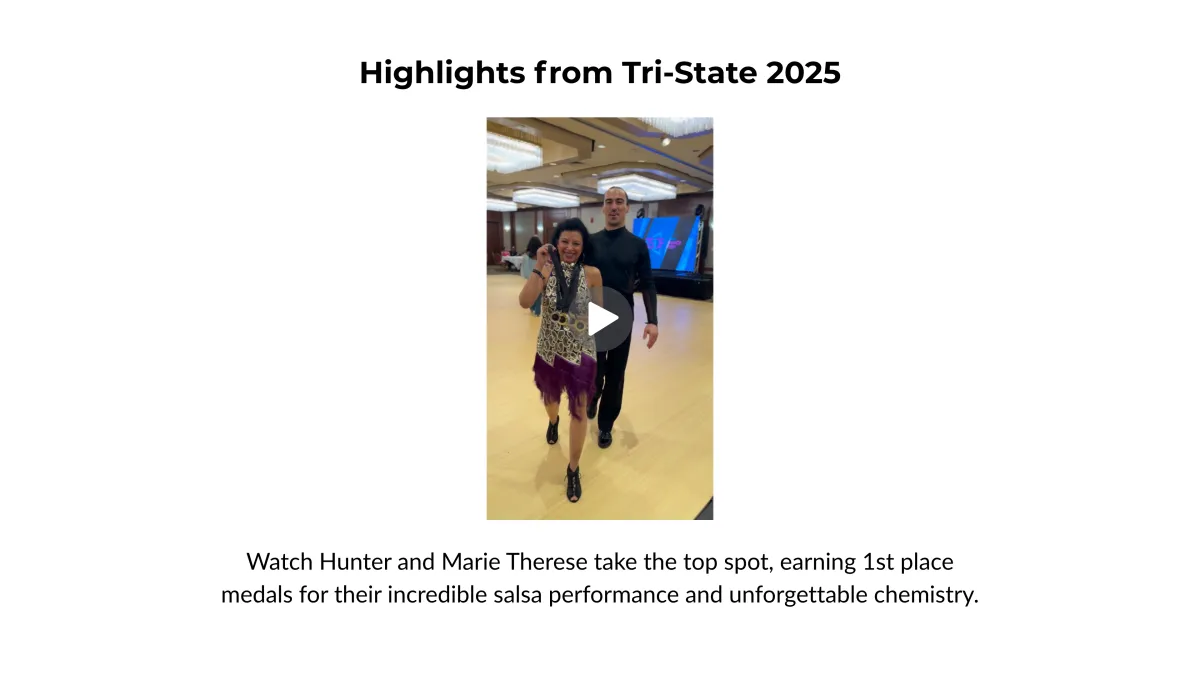
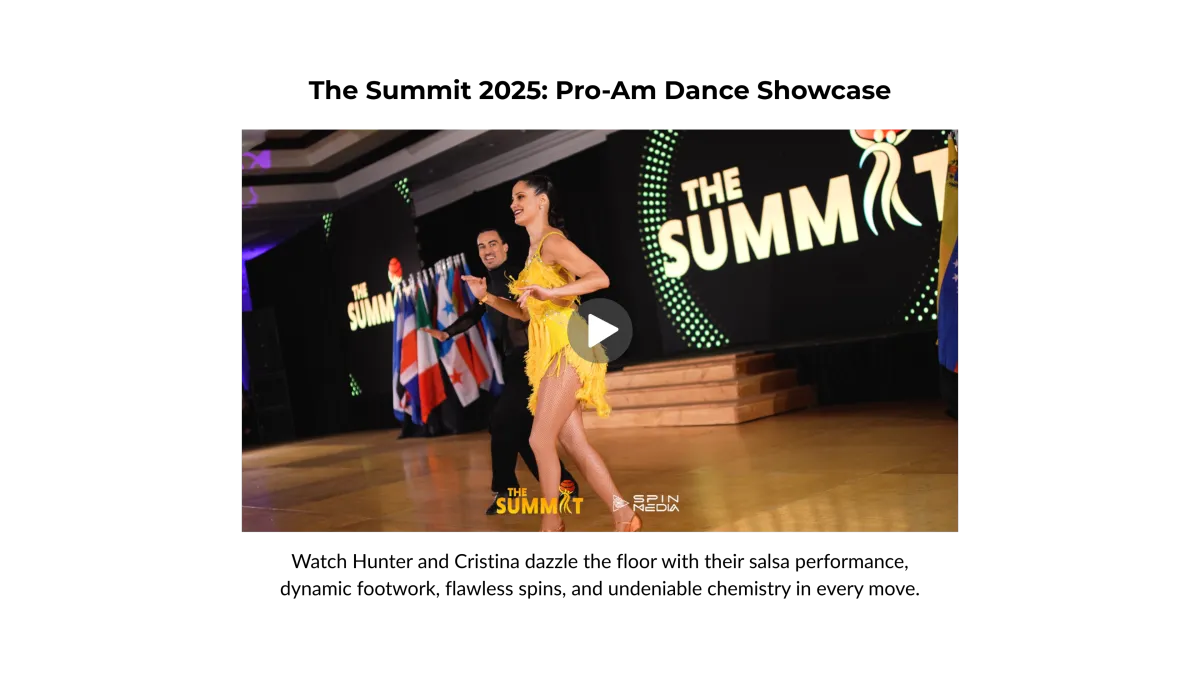
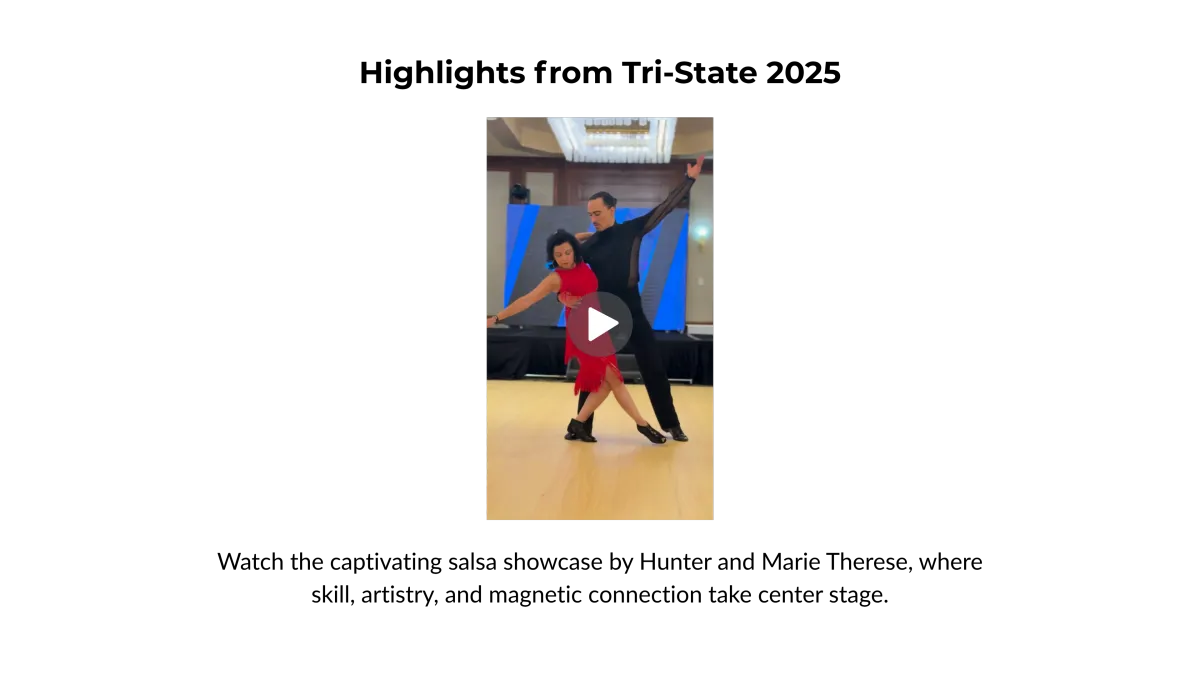
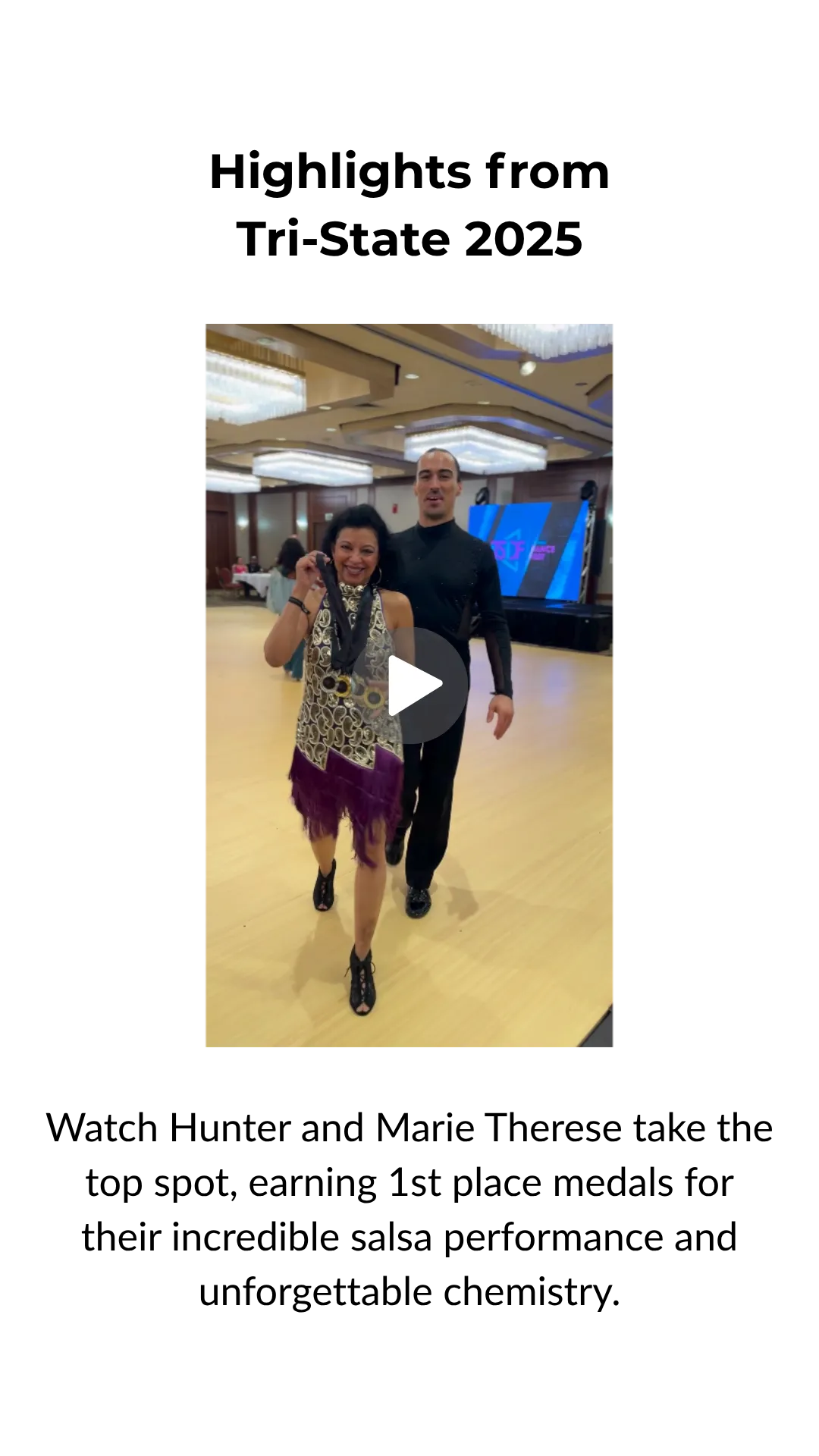
Want to experience a glimpse of highlights from our showcases? Watch the videos below.
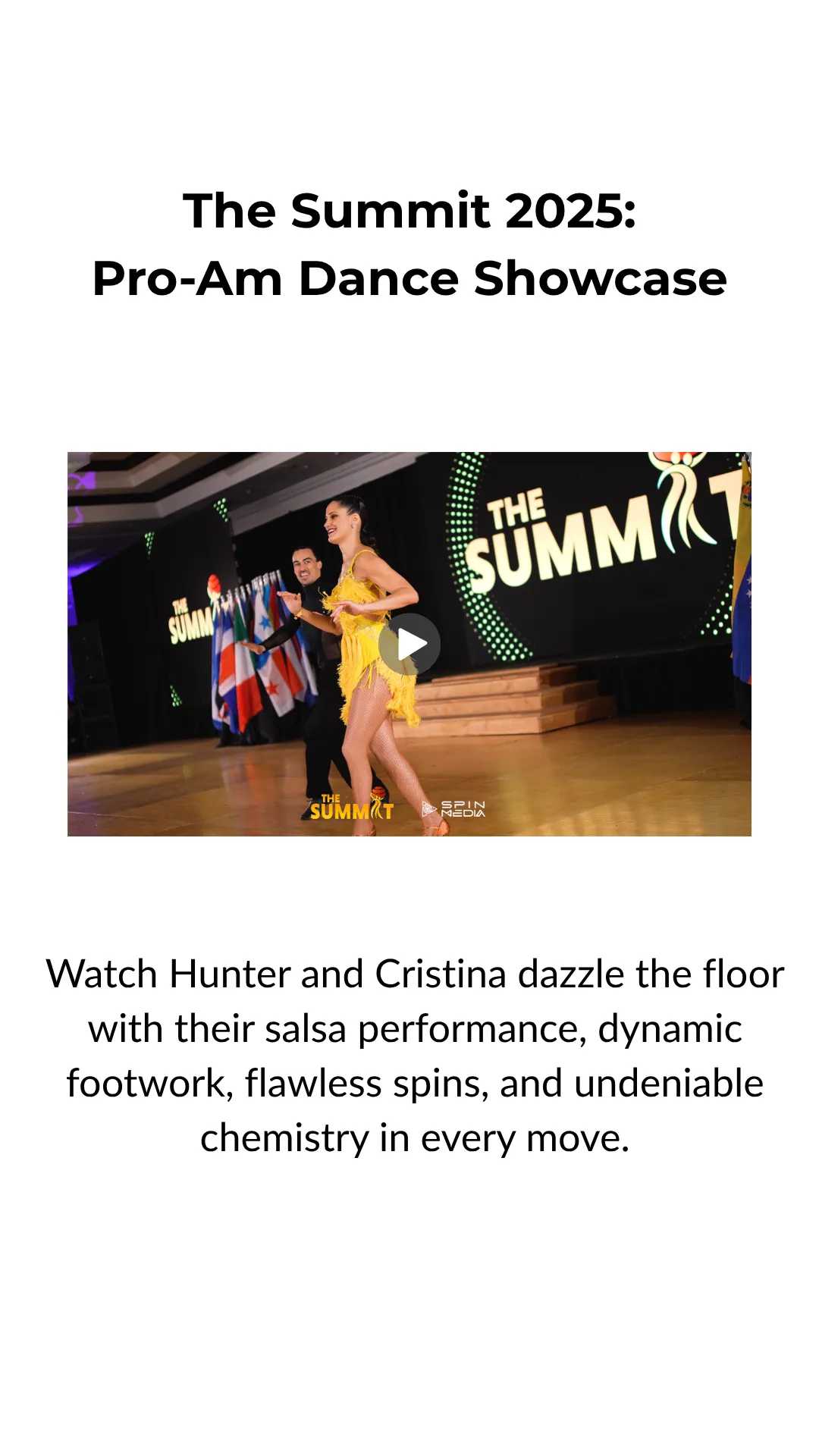
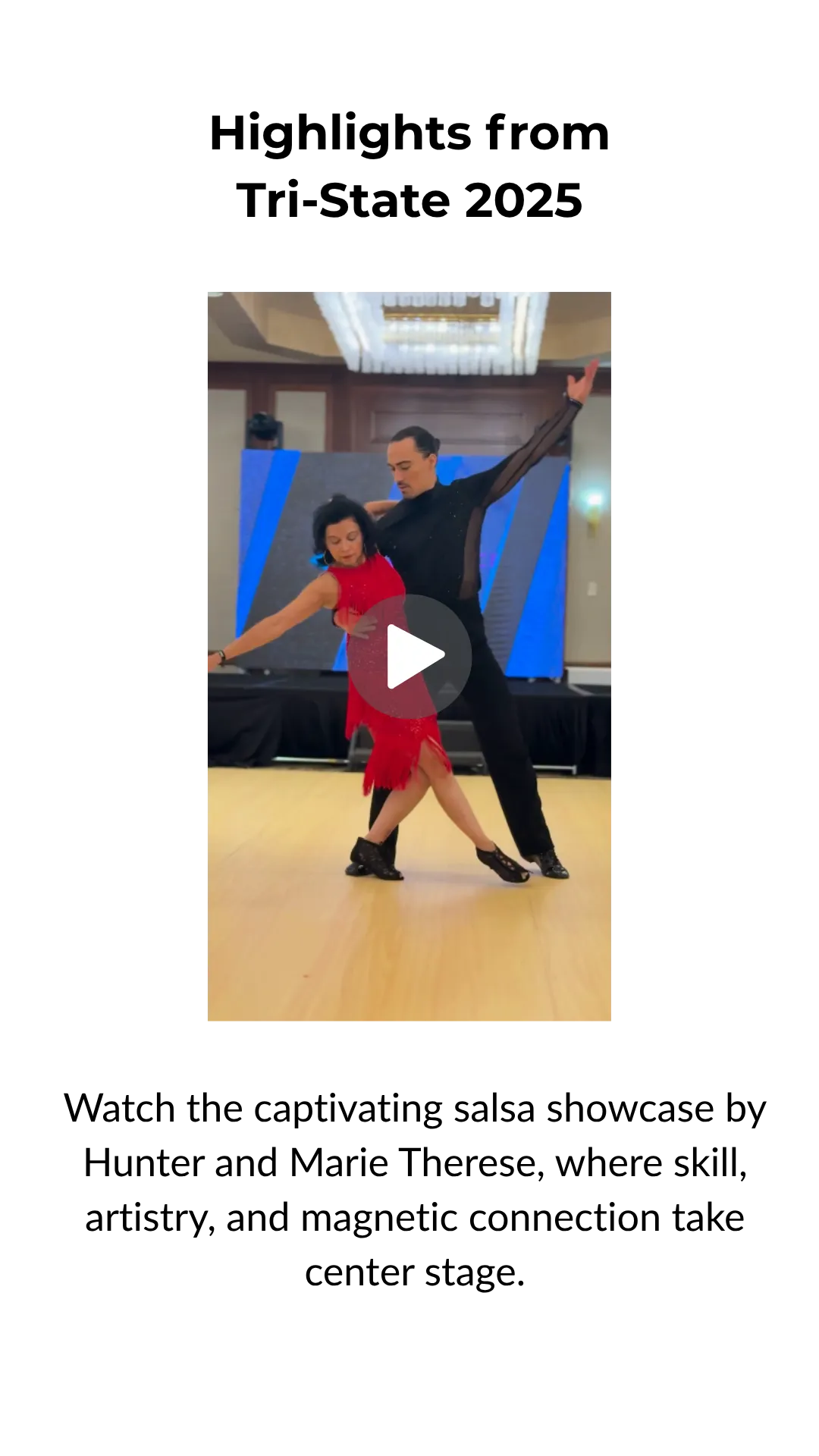
Student Training Rates
Individual Training
Get personalized, one-on-one coaching tailored to your level and goals.
Focus on building confidence, improving timing, and accelerating your progress on the dance floor.
Develop strong fundamentals while receiving real-time feedback to refine your technique and movement quality.
Team Training
Experience the thrill, challenge and joy of being part of a student performance team.
Accelerate your growth rapidly through refining your dance technique and learning choreography, bond with your class mates, and engage with the greater salsa community locally and around the world.
What Our Dancers Say
“After 10 years of social dancing, I didn’t realize I had built so many bad habits. In just 3 months, Hunter helped me refine the small, nuanced movements that were holding me back. I now feel more fluid, more confident, and truly prepared to compete.”
— Cristina
“Hunter has been my dance coach for about 14 months.
What I love about being Hunter's student is that he gives my love of dance freedom while reigning me in to count, which is very important.”
— Marie Therese
What It’s Really Like to Compete?
Why compete?
Competing is about way more than the competition itself. it’s about continual growth, community, and inspiration. Benefits include:
✓ A goal to train for
✓ Focused training sessions
✓ A community of mutual support helping eachother grow
✓ Becoming part of the greater salsa community
✓ Getting to travel with friends
✓ Expanding your network and making new friends
✓ Being inspired by professional artists from around the world
✓ Seeing yourself as a dancer: costume, identity, and performance confidence
What to expect?
Key aspects to the competition expereince
1. Training
Weekly training is at the core of your competition experince. whether you're training one on one or as a part of a team, weekly training is essential for lasting and felt improvement in your dancing and is the life blood of your dance journey. Weekly training with your instructors and team mates is also what helps forms the bonds of friendship that make up some of the most rewarding expereinces in your journey.
2. Competition
Competing one of the the best way to improve in your dancing becuase it gives you frequet opportinites to showcase your dancing marking your progress as you improve and act as milestones for your training. Although you do compete with other dancers at the events, the real competition is with yourself. Every competiton marks new achievements and new quality in your dancing that you can feel and see. Despite being a competition, the environment is overwhelmingly supportive and fun loving. People participate in these events to express their passion for dance and latin music, and this forms a comradery that is easy, natural and felt.
3. Costumes make-up and hair
Just like wearing a bathing suit to the beach or a suit to a business meeting, dressing the part helps you meet the moment and gives you the best chance for success. Proper dance attire allows you to move more freely and fully step into the role of a dancer. For women, and men if they choose, stage makeup enhances this effect in the same way. Ultimately, presenting yourself this way is an important part of embracing your identity as a dancer… and you’ll look like a million bucks doing it!
What types of competitions are there to compete in?
Divisions:
✓ Amateur: Non-professional dancers. Can compete solo, in couples, or in group choreography.
✓ Pro-Am: Amateur dancing alongside a professional. Can compete in couples or group choreography with at least one professional dancer.
Levels: Competitions are available for all stages, from absolute beginner to advanced.
Age Categories:
Youth: Under 18 years of age
Adult divisions: 18+
Over 40, 50, and even 60 divisions available
Types of Competition:
✓ Showcase: For choreographies
✓ Heats: Freestyle social dancing with music chosen by the DJ
Who Competes?:
Solo - one person alone
partnership - one lead one follow
Team - 3 or more people
Styles of Dances
The core 5 dances in competitions are:
1. Salsa
2. Bachata
3. Cha Cha
4. Hustle
5. Merengue
Many competitions also include:
1. West Coast Swing
2. Kizomba
3. Zouk
What does a typical training session include?
Individual Training
Weekly sessions of at least 1 hour; some students train 2+ hours per week.
Training focuses on refining technique, connection, presentation, confidence and whatever other personalized skills that are most relevant to your goals
Team Training
Team training happenss once/week where choreo is taught, rehearsed and refined. For individual dancers, special focus is placed on refining what you learn in class into a more polished version as it is applied to the choreography.
Heats Training
Learn a basic syllabus of moves for each dance style.
Improve social dancing, lead/follow, and improvisational skills.
Showcase Training
Choreography created with your coach (solo, couple, or group).
Focus on quality dancing and expressing artistry.
Repetition improves technique, vocabulary, and performance quality.
Are costumes provided or do we need to buy our own?
✓ For individual shows costumes are not technically required but are highly reccomended and play an important part in the overall presentation of your dancing. Not to mention they help you look the part and feel your best!
✓ Costumes need to be purchased by each dancer. Prices vary greatly from very afordable low cost options to elaborate and expensive.
✓ Team costumes costs will be kept reasonable to allow everyone to have the opportunity to perform.
How are performances judged in competitions?
Timing – 20%: Consistency with the music.
Musicality – 15%: Creative interpretation of the music.
Technique – 15%: Balance, placement, lines, and proper weight shifts.
Difficulty – 15%: Complexity of patterns, turns, shines, tricks, dips, drops, and flares.
Partnering/Connection – 15%: Lead/follow quality and audience connection.
Choreography – 10%: Interpretation and flow of the dance.
Overall Presentation – 10%: Costuming, showmanship, and sportsmanship.
Copyright @ HunterHoude. All rights reserved
Salsa with Hunter - Powered by HunterHoude